- London Finest Interior Manufacturer

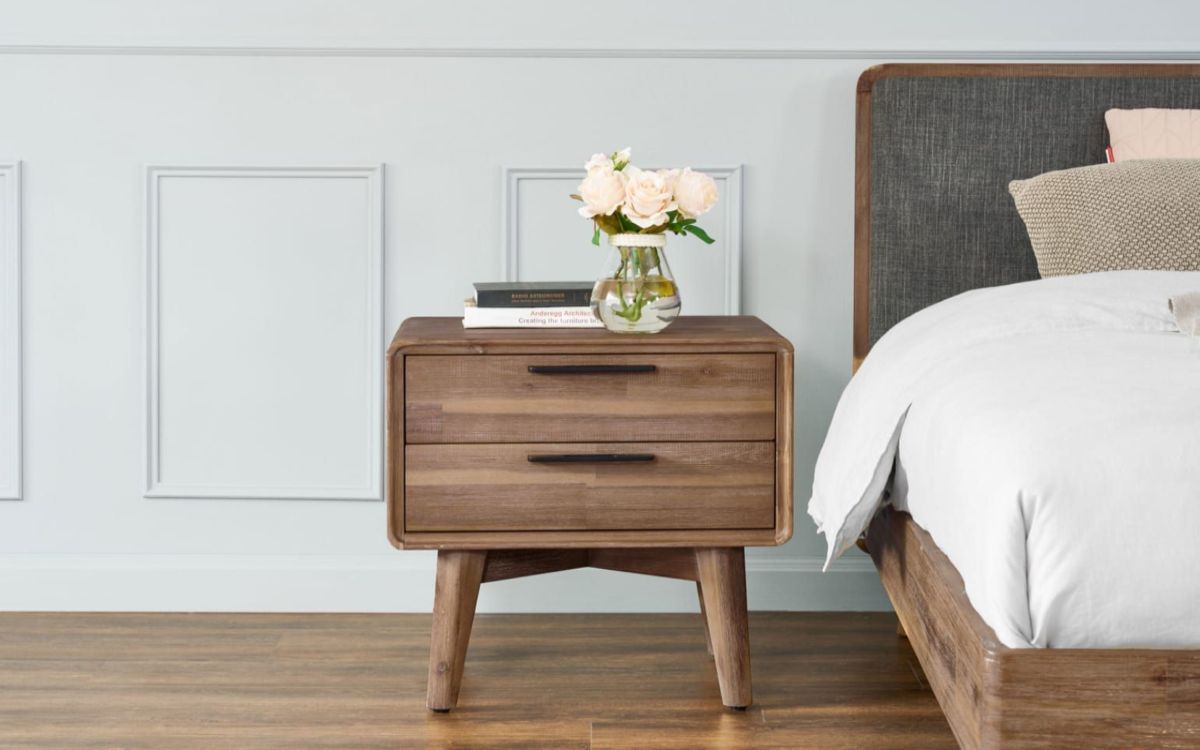
is around 60 cm high, 45 cm wide, and 40 cm deep, offering a comfortable reach and a balanced look beside most beds. For accuracy, aim for a table that is level with or slightly above your mattress top to ensure practicality and visual harmony. The average bedside table size typically ranges between 60–70 cm in height and 40–50 cm in width, providing enough surface for essentials like lamps, books, and glasses while maintaining proportion with your bed.
When designing a comfortable and stylish bedroom, every piece of furniture plays a role in shaping the space, and one of the most underrated yet essential items is the bedside table. The size of the bedside table you choose can impact the look, practicality, and balance of your entire room. Too large, and it may overwhelm the bed area; too small, and it can appear awkward and limit functionality. Understanding the correct bedside table size in cm, inches, mm, ft., or metres helps you make an informed choice that complements both your bed and your lifestyle.
This comprehensive guide explores everything you need to know about bedside table size, from standard dimensions to tips for choosing between 1, 2, or 3-drawer models. Whether your style is modern, traditional, or minimalist, this guide will help you find the perfect fit.
The bedside table serves a purpose beyond aesthetics. It’s a practical addition that provides a home for lamps, alarm clocks, books, or your evening tea. Getting the right size ensures convenience, accessibility, and visual balance. A mismatched table can make your room look disorganised or feel uncomfortable to use.
Designers often suggest that the height of the bedside table should be roughly level with the top of your mattress. This ensures that you can easily reach your belongings without straining, especially when lying down. Similarly, the width and depth need to be proportionate to the size of your bed and the layout of your room.
The average bedside table size generally falls between 60–70 cm (24–28 inches) in height, 40–50 cm (16–20 inches) in width, and 35–45 cm (14–18 inches) in depth. These dimensions suit most beds and provide ample surface space for essentials like a reading lamp, water glass, or decorative accessories.
However, your ideal table dimensions depend on your bed’s height and the available space on either side. Let’s explore these measurements in detail across various units for easier reference.
If you prefer a low-profile or minimalist style, tables around 50 cm (20 inches) high may look better. For tall or high-framed beds, opt for tables around 70–75 cm (28–30 inches).
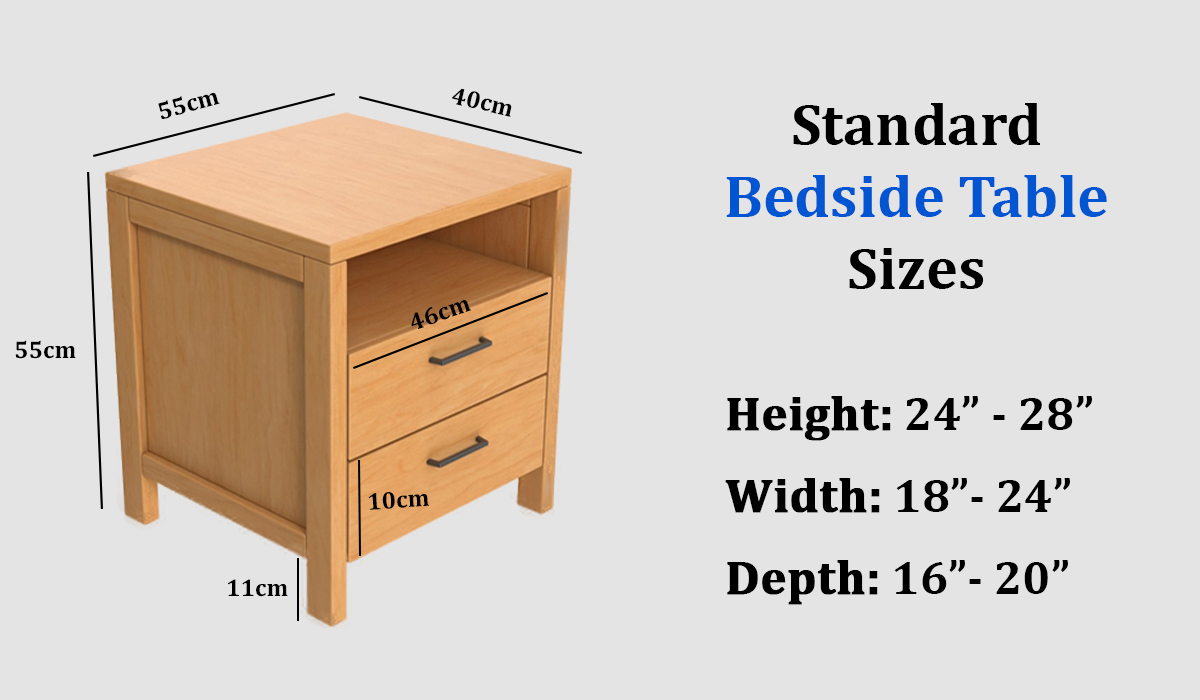
The standard size for a bedside table is typically 60 cm high, 45 cm wide, and 40 cm deep. This standard bedside table size offers a balanced combination of functionality and proportion, making it suitable for most bed designs.
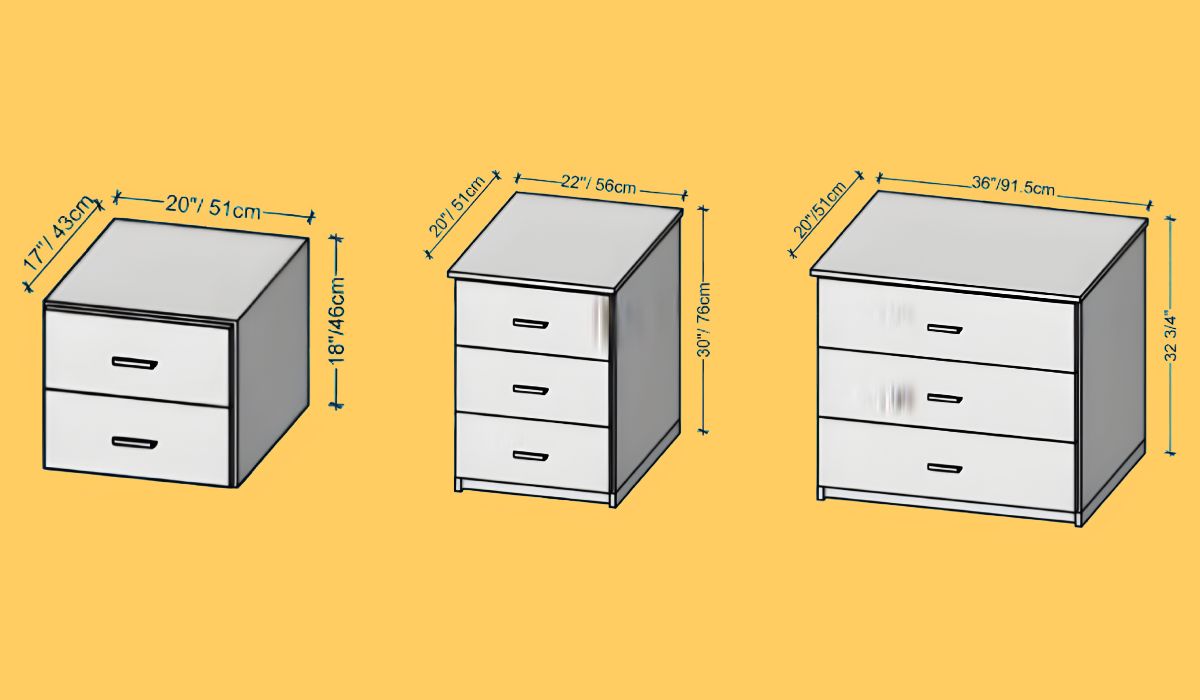
That said, you can always adjust as needed. For example, a 1 drawer bedside table may be slimmer and lower, ideal for smaller bedrooms or guest rooms. Meanwhile, 2 drawer bedside tables or 3 drawer bedside tables tend to be taller and provide more storage, perfect for master bedrooms or shared spaces.
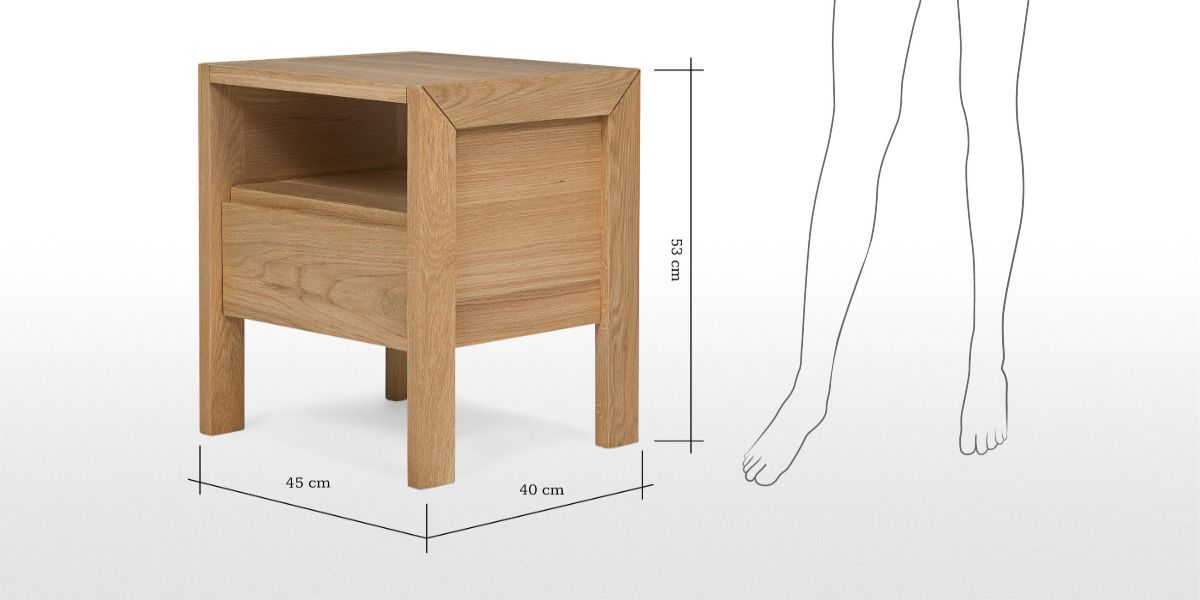
Your bed type directly influences the ideal bedside table height. The aim is to have the table top align with or slightly above the mattress top. Here’s a simple guide:
Bed Type | Recommended Table Height |
Platform Bed (Low Frame) | 45–55 cm (17–22 inches) |
Standard Bed | 55–65 cm (22–26 inches) |
Divan or Box Spring Bed (Higher Frame) | 65–75 cm (26–30 inches) |
If you’re unsure, measure from the floor to the top of your mattress and choose a table within 5 cm of that height. This alignment creates an ergonomic setup that looks cohesive and feels comfortable to use.
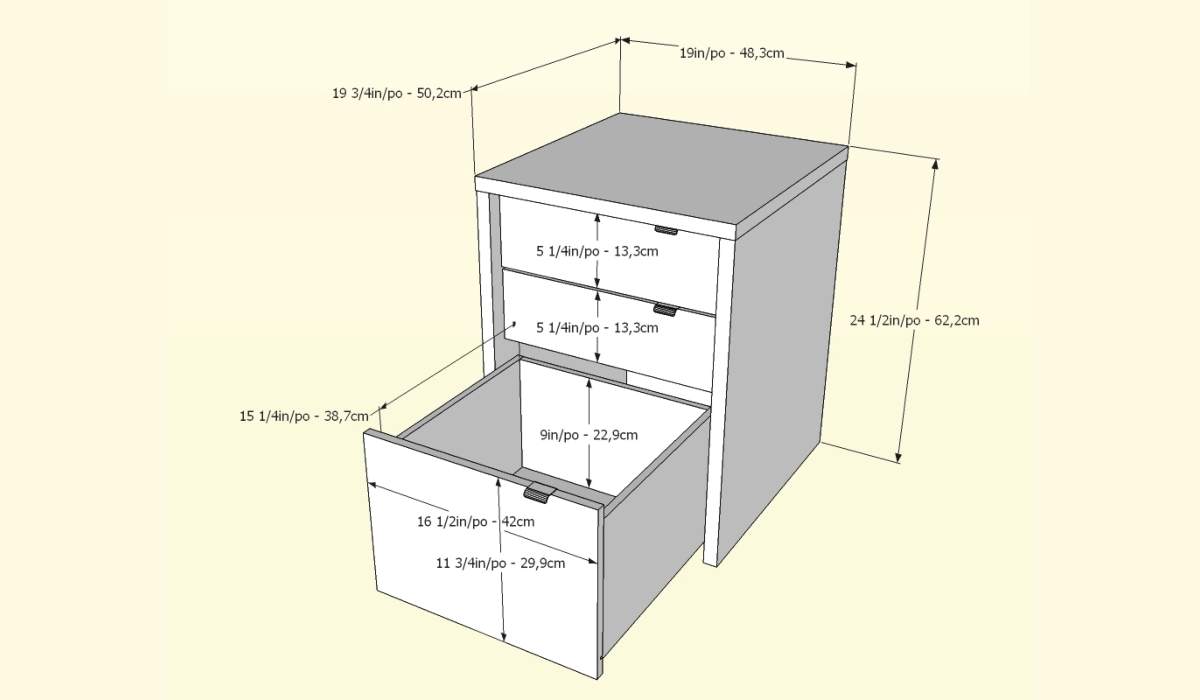
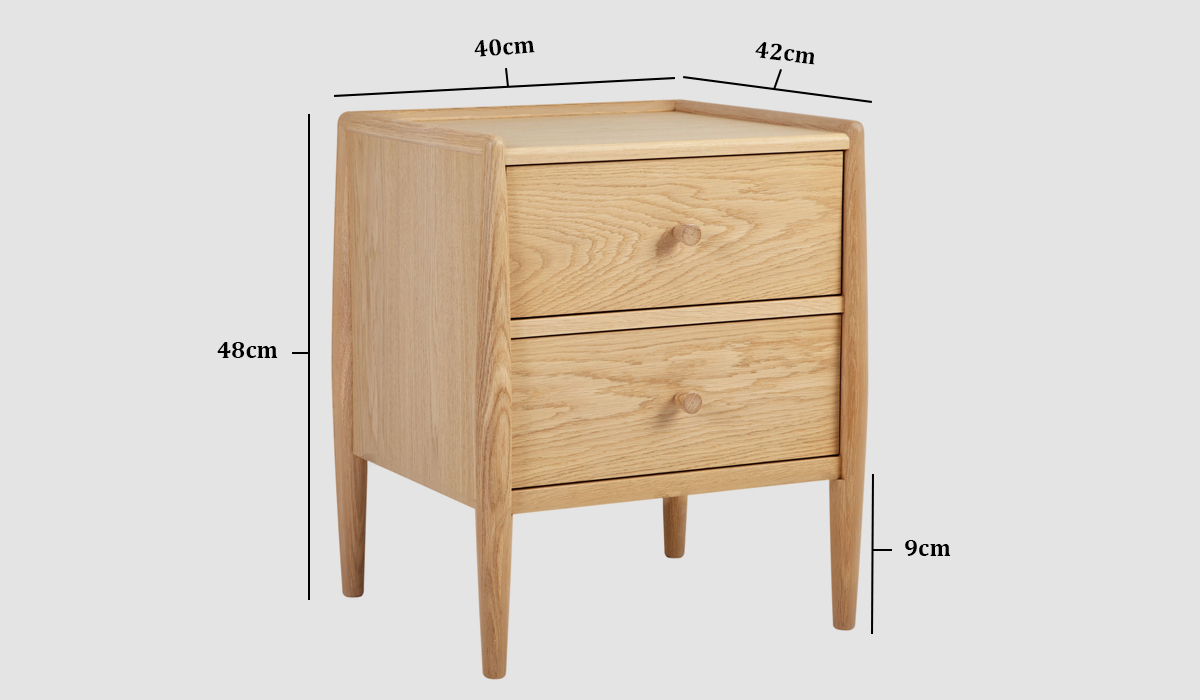
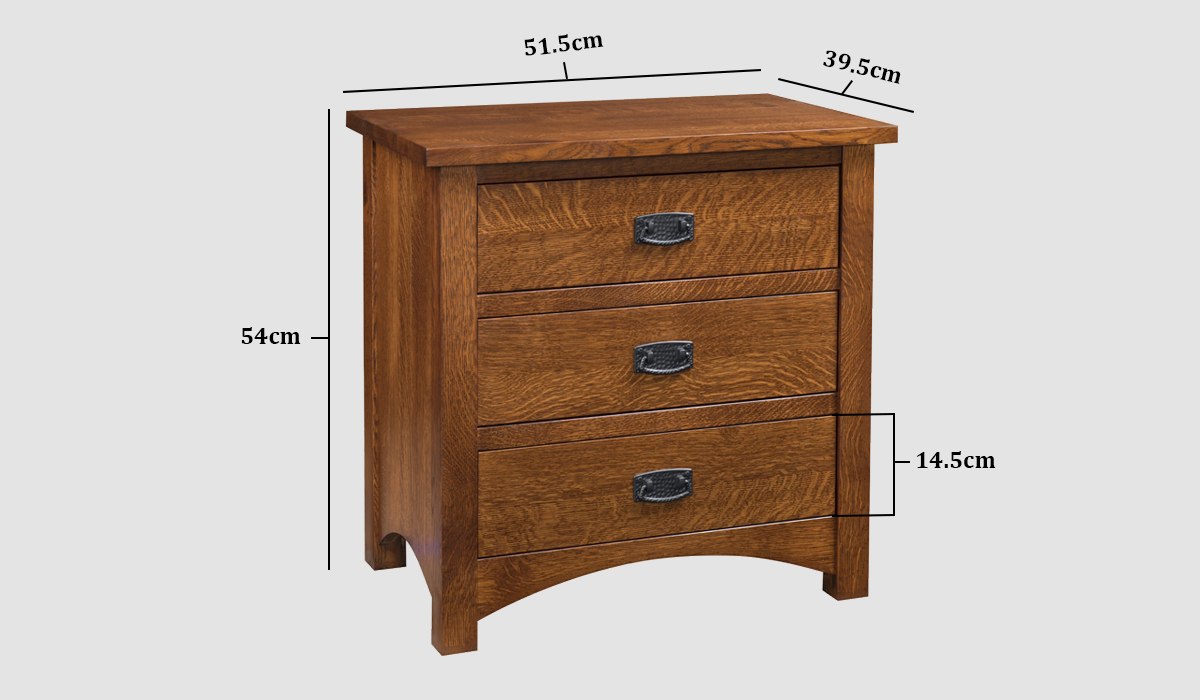
Storage needs differ for everyone, so it’s important to consider how many drawers or shelves you prefer when selecting your bedside table.
A 1 drawer bedside table is perfect for compact bedrooms or minimalist spaces. It offers enough surface space for a lamp, clock, or phone, with one discreet drawer for small essentials. These tables typically measure 45–55 cm wide and 50–60 cm high, giving a light, uncluttered feel to the room.
The 2 drawer bedside table strikes a balance between functionality and style. With one drawer for essentials and another for extra items, it’s practical yet doesn’t take up excessive space. The height often ranges between 55 and 65 cm, aligning well with standard beds.
For those who need more storage, the 3 drawer bedside table is ideal. It’s taller, usually around 65–75 cm, making it perfect for rooms with high beds or those who prefer extra drawer space for books, chargers, or accessories. While it occupies slightly more visual space, it provides unmatched convenience and helps reduce clutter.
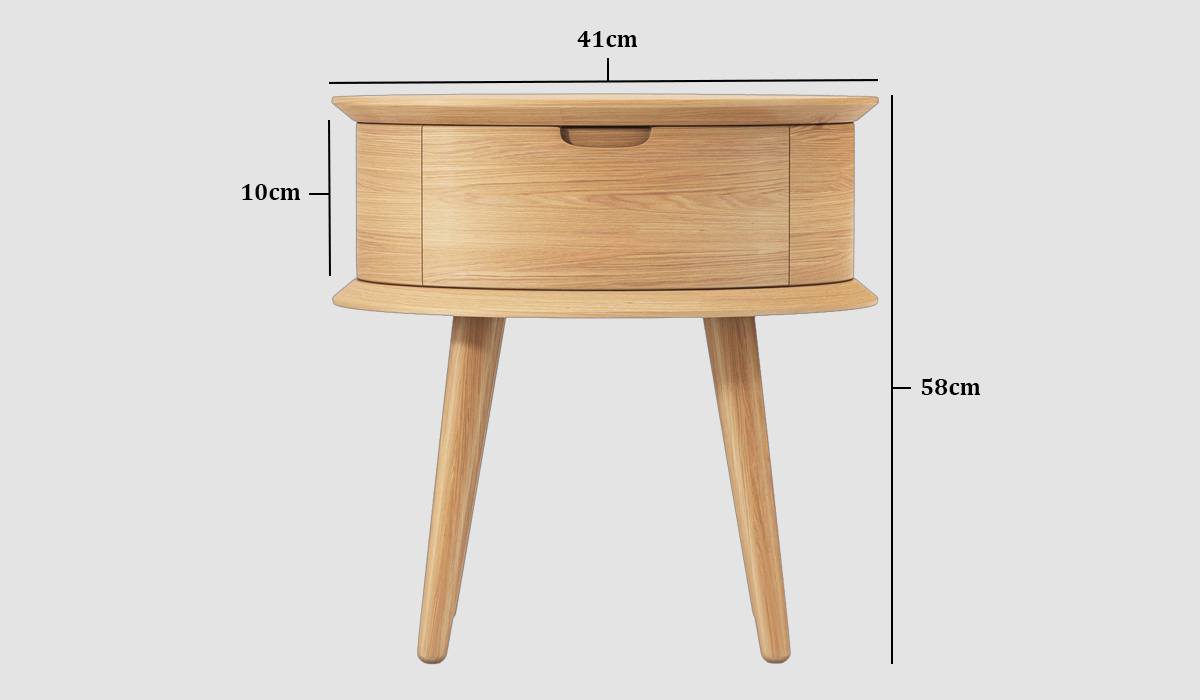
When considering width and depth, factor in the size of your bed and the available floor area.
Depth should be around 35–45 cm (14–18 inches) to provide enough space without crowding the walkway. A deeper table may feel bulky in smaller rooms, so always consider clearance around the bed.
Because furniture dimensions are often shown in different units, understanding conversions is useful when comparing options online or in stores.
The design of your bedside table should harmonise with the overall style of your bedroom. For instance:
Colour, texture, and material also influence the perception of size. Lighter tones create a more spacious look, while dark woods or metal frames give depth and contrast.
Sometimes, pre-made furniture doesn’t perfectly suit your bedroom’s proportions. This is where custom-made designs shine. Bespoke options allow you to choose the exact height, width, and number of drawers you want. For instance, Fitted Bedroom Wardrobes offers tailored solutions that seamlessly fit your room’s dimensions and storage needs, ensuring your bedside tables match your overall décor theme perfectly.
Selecting the right bedside table size is more than a design choice, it’s about enhancing comfort, accessibility, and visual harmony in your bedroom. By understanding the standard bedside table size, the average bedside table size, and how these dimensions translate into cm, inches, mm, ft., and metres, you can create a space that feels both functional and beautifully balanced.
Whether you prefer a 1 drawer bedside table for simplicity or a 3 drawer bedside table for extra storage, the key lies in choosing a design that suits your bed height and complements your décor. With the right bedside tables, your bedroom becomes a seamless blend of practicality and elegance, a place that feels thoughtfully complete.
The standard bedside table size is typically around 60 cm high, 45 cm wide, and 40 cm deep. However, this can vary depending on bed height and room layout. It’s best to choose a table that sits close to the top of your mattress for comfort and balance.
Ideally, a bedside table should be level with or slightly higher than the top of your mattress. This makes it easier to reach your essentials while lying down. For standard beds, a height of 55–65 cm works well, whereas higher beds may need tables up to 75 cm.
For compact spaces, a 1 drawer bedside table around 35–40 cm wide and 50–55 cm high is ideal. It offers enough surface area for a lamp and a few items without crowding the room. You can also consider floating or slim designs to save floor space.
A 1 drawer bedside table suits minimalist or small rooms, a 2 drawer bedside table offers a good balance of storage and style, and a 3 drawer bedside table provides maximum storage for larger bedrooms. The choice depends on your storage needs and space availability.
The average bedside table size is around 60–70 cm (24–28 inches) in height, 40–50 cm (16–20 inches) in width, and 35–45 cm (14–18 inches) in depth. These dimensions work well for most bed types and provide a practical surface for daily use.
Weekly and Monthly Sales, Discounts & More!